
Overcoming Stage Fright
7 mins read
By Dr. Chantale Lussier, PhD. CMPC
A Performance Psychology Perspective for Performing Artists
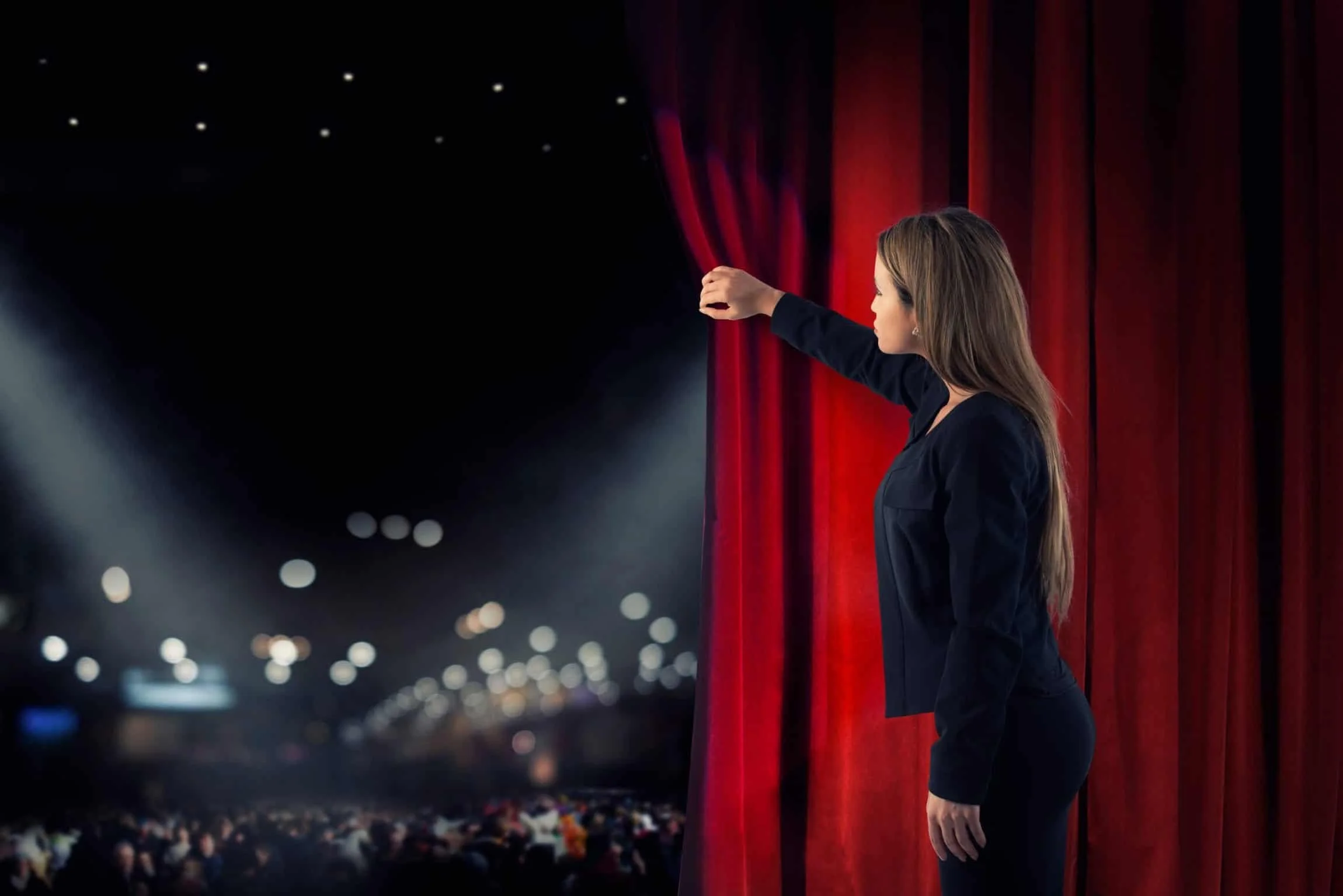
For performing artists such as dancers, musicians, actors, and singers, the stage is often experienced as both sanctuary and battleground. It is a place of deep aliveness, expression, and connection, and also one where vulnerability is fully exposed. In those moments before stepping into the light, familiar sensations may arise: a racing heart, a tightening chest, trembling limbs, or a flood of intrusive thoughts. These experiences can feel disorienting, particularly when they appear to threaten years of disciplined training and artistic devotion.
Performance anxiety, often referred to as stage fright, is not an indication of fragility, nor is it a failure of preparation. Rather, it reflects a deeply human response to situations that matter. When understood through the lens of performance psychology, nervousness can be reframed as meaningful activation, a signal that the task ahead is significant and emotionally charged. As composer and performer Lin-Manuel Miranda has noted, nervous energy can be harnessed and directed rather than fought, becoming a source of propulsion rather than paralysis (Miranda, 2016).
The Physiology of Performance Anxiety
At its core, performance anxiety is rooted in the body’s stress response. When the brain perceives threat or heightened evaluation, it activates the sympathetic nervous system, releasing adrenaline and cortisol to prepare the body for action. This fight-or-flight response evolved to ensure survival in physically dangerous situations, yet it is easily triggered in modern performance environments where social judgment, identity, and self-worth feel at stake.
For performers, this physiological activation often manifests as increased heart rate, shallow breathing, muscle tension, or dry mouth. These sensations are not inherently harmful. In fact, decades of research suggest that a certain level of physiological arousal is not only normal but beneficial for performance. The well-established Yerkes–Dodson law describes a curvilinear relationship between arousal and performance, indicating that optimal performance occurs at moderate levels of activation rather than complete calm (Yerkes & Dodson, 1908).
Difficulties emerge when performers interpret these bodily sensations as signs of impending failure. When arousal is paired with catastrophic thinking or excessive self-monitoring, attention narrows and performance quality can suffer. This interaction between physiology and cognition is central to understanding why anxiety feels so powerful on stage.
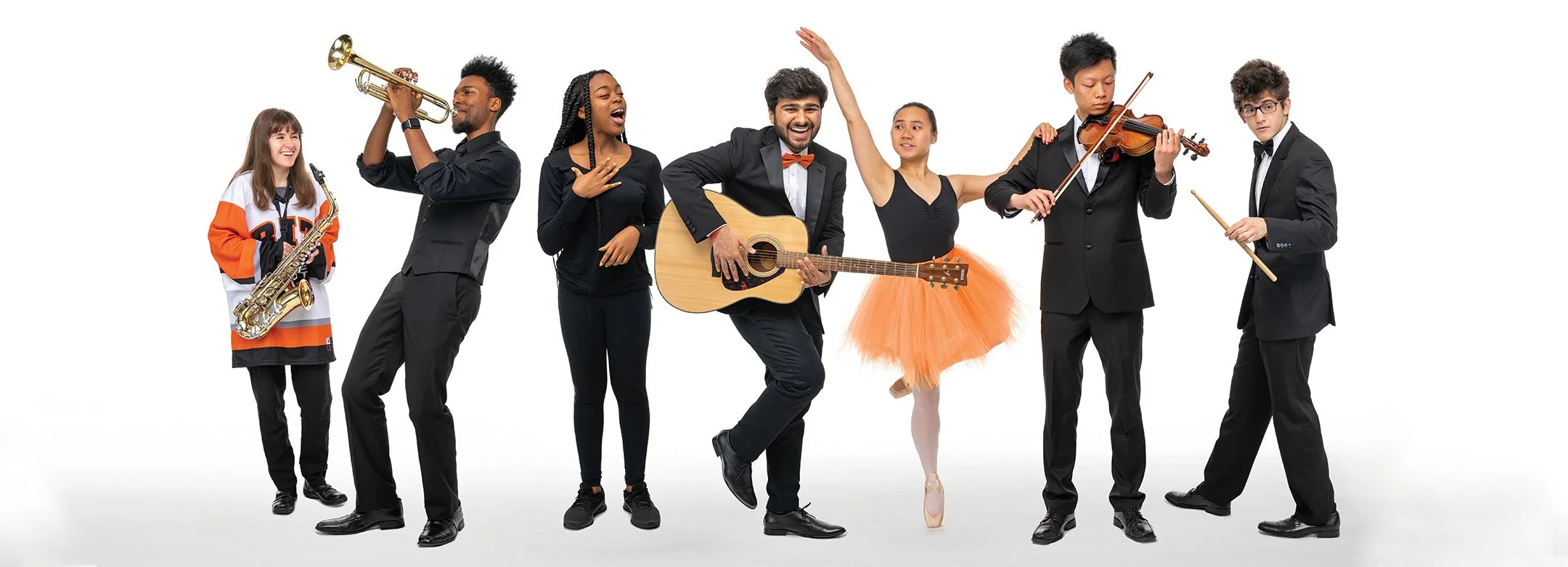
Image © Rochester Institute of Technology, Performing Arts
How Common Is Performance Anxiety?
Performance anxiety is pervasive across artistic disciplines. Research on music performance anxiety suggests that between sixty and eighty percent of musicians experience significant anxiety related to performance at some point in their careers (Kenny, 2011). Dancers report similar challenges, often compounded by body-based evaluation, perfectionistic standards, and injury-related fears, all of which intersect with identity formation (Walker & Nordin-Bates, 2010). Actors frequently describe cognitive anxiety related to memory, emotional access, and external judgment, particularly in audition contexts where uncertainty is high (Burgoyne et al., 1999).
Importantly, performers themselves recognize the need for psychological skill development. In a survey of university music majors, ninety-eight percent expressed a desire to improve their mental skills in order to better cope with performance demands (Sattel, 2016). This finding underscores a critical point. Technical excellence alone does not guarantee consistency under pressure. Psychological readiness is an essential, trainable component of performance.
Building Confidence Through Preparation
Preparation remains one of the most reliable foundations for performance confidence. When choreography, musical passages, text, or vocal technique are deeply embodied through deliberate practice, performers rely less on conscious control in high-pressure moments. This allows attention to shift away from fear of mistakes and toward expression, timing, and connection.
Research on expertise and skilled performance suggests that overlearning supports automaticity, particularly under stress, reducing the likelihood of performance breakdown when attentional resources are taxed (Beilock & Carr, 2001). Preparation does not eliminate anxiety, but it builds trust. Trust in one’s body, training, and capacity to adapt in real time.
Regulating Arousal Through Breath
Breathing offers a direct and accessible pathway to nervous system regulation. Slow, intentional breathing stimulates parasympathetic activity, counterbalancing the heightened arousal of the stress response. For performers, breath becomes both a physiological anchor and a psychological cue for grounding.
One commonly used approach is box breathing, which involves inhaling, holding, exhaling, and pausing for equal counts. Practiced consistently, this technique can help lower heart rate, steady attention, and create a felt sense of control before or during performance. As you emphasize in your work, different breathing strategies invite different performance states. Learning how and when to use them is a foundational mental skill, one that supports both regulation and artistic presence.
Transforming Self-Talk
The internal dialogue that accompanies performance plays a significant role in shaping emotional experience and attentional focus. Habitual self-critical thoughts often increase cognitive anxiety and divert attention away from task-relevant cues. Over time, this pattern can erode confidence and reinforce perfectionistic tendencies.
Cognitive-behavioral research highlights the effectiveness of reframing self-talk to support performance under pressure. Constructive, task-focused inner dialogue has been associated with improved confidence, emotional regulation, and consistency (Hardy et al., 2009). The aim is not to silence doubt but to respond to it with clarity and compassion.
Comedian and writer Tina Fey’s reminder that perfection is both unrealistic and uninteresting resonates deeply in performance contexts (Fey, 2011). Learning to speak to oneself with respect and encouragement supports not only performance outcomes but also a healthier relationship with one’s artistic identity.
The Role of Visualization
Mental imagery has long been used in sport and performance psychology as a means of preparing for high-pressure situations. Functional imagery engages sensory, emotional, and kinesthetic components of performance, activating neural pathways similar to those used during physical execution.
Research suggests that visualization can enhance confidence, regulate emotional states, and improve performance consistency when practiced deliberately and vividly (Cumming & Ramsey, 2009). For performers, imagery is most effective when it includes not only technical execution but also the desired emotional tone, such as groundedness, joy, expressivity, or connection.
Creating Meaningful Pre-Performance Routines
Pre-performance routines offer structure in environments that are inherently unpredictable. By engaging in a consistent sequence of actions before performing, artists signal to the body and mind that it is time to transition into performance mode.
Research with both athletes and musicians indicates that routines can stabilize attention, regulate arousal, and enhance perceived control (Cotterill, 2010). Effective routines are personal and flexible rather than rigid. They may include physical or vocal warm-ups, breathwork, imagery, music, or quiet moments of centering. Over time, these rituals become psychologically reassuring, grounding performers amid external demands.
Shifting Attention From Self to Purpose
One of the most powerful shifts a performer can make is moving attention away from self-evaluation and toward purpose. Excessive self-focus has been linked to performance breakdown under pressure, whereas an external or meaning-based focus supports flow and expressivity.
Many performers find that reframing performance as an act of service or communication reduces anxiety. When the emphasis shifts from being judged to sharing something meaningful, the performance experience becomes relational rather than evaluative. This perspective aligns with research on meaning and self-transcendence, which suggests that purpose can buffer stress and enhance resilience in high-demand environments.
Image © Boston University, College of Fine Arts
When Artists Speak Openly About Stage Fright
Performance anxiety is not confined to early-career artists. Renowned performers across disciplines have spoken candidly about their struggles with nerves. Singer Adele has described experiencing intense anxiety and panic symptoms before performances (Adele, 2015). Opera soprano Renée Fleming has discussed learning psychological strategies to manage nerves at the highest professional levels (Fleming, 2004). Cellist Pablo Casals reportedly acknowledged persistent stage fright well into his later years, despite his legendary status (Blum, 1977). Actor Emma Stone has also spoken openly about anxiety accompanying her career and the coping strategies that supported her (Stone, 2018).
These accounts normalize performance anxiety as an enduring aspect of artistic life rather than a problem to be eradicated. They also highlight the importance of mental skills in sustaining long-term careers.
Integrating Mental Skills Into Artistic Training
Stage fright does not have to prevent performers from sharing their work fully and authentically. When mental skills are integrated alongside technical training, artists develop a more robust and flexible performance foundation. The goal is not the absence of nerves, but the ability to relate to them differently.
With practice, curiosity, and self-compassion, nervous energy can become a source of vitality rather than fear. Performance then becomes not a test to survive, but an experience to inhabit, share, and shape with intention.
Ready to Strengthen Your Mental Skills?
Want to work on your mental skills and rise above performance jitters?
Book your free 15-minute discovery call here.
References
Beilock, S. L., & Carr, T. H. (2001). On the fragility of skilled performance: What governs choking under pressure? Journal of Experimental Psychology: General, 130(4), 701–725. https://doi.org/10.1037/0096-3445.130.4.701
Blum, D. (1977). Casals and the art of interpretation. University of California Press.
Burgoyne, S., Poulin, K., Rearden, A., & Rearden, J. (1999). The experience of acting: A phenomenological study. Journal of Phenomenological Psychology, 30(2), 157–179.
Cotterill, S. T. (2010). Pre-performance routines in sport: Current understanding and future directions. International Review of Sport and Exercise Psychology, 3(2), 132–153.
Cumming, J., & Ramsey, R. (2009). Imagery interventions in sport. In S. D. Mellalieu & S. Hanton (Eds.), Advances in applied sport psychology (pp. 5–36). Routledge.
Fey, T. (2011). Bossypants. Little, Brown and Company.
Hardy, J., Oliver, E., & Tod, D. (2009). A framework for the study and application of self-talk in sport. International Review of Sport and Exercise Psychology, 2(2), 306–326.
Kenny, D. T. (2011). The psychology of music performance anxiety. Oxford University Press.
Miranda, L.-M. (2016). Interview excerpts on performance and nerves. The New York Times.
Sattel, M. A. (2016). Mental skills training for musicians. International Journal of Music and Performing Arts, 4(1), 1–10. https://doi.org/10.15640/ijmpa.v4n1a2
Walker, I. J., & Nordin-Bates, S. M. (2010). Performance anxiety experiences of professional ballet dancers. Journal of Dance Medicine & Science, 14(3), 105–113.
Yerkes, R. M., & Dodson, J. D. (1908). The relation of strength of stimulus to rapidity of habit-formation