
Why Your Inner Critic Is Your Worst Enemy (And How to Silence It)
5 mins read
By Dr. Chantale Lussier, PhD. CMPC
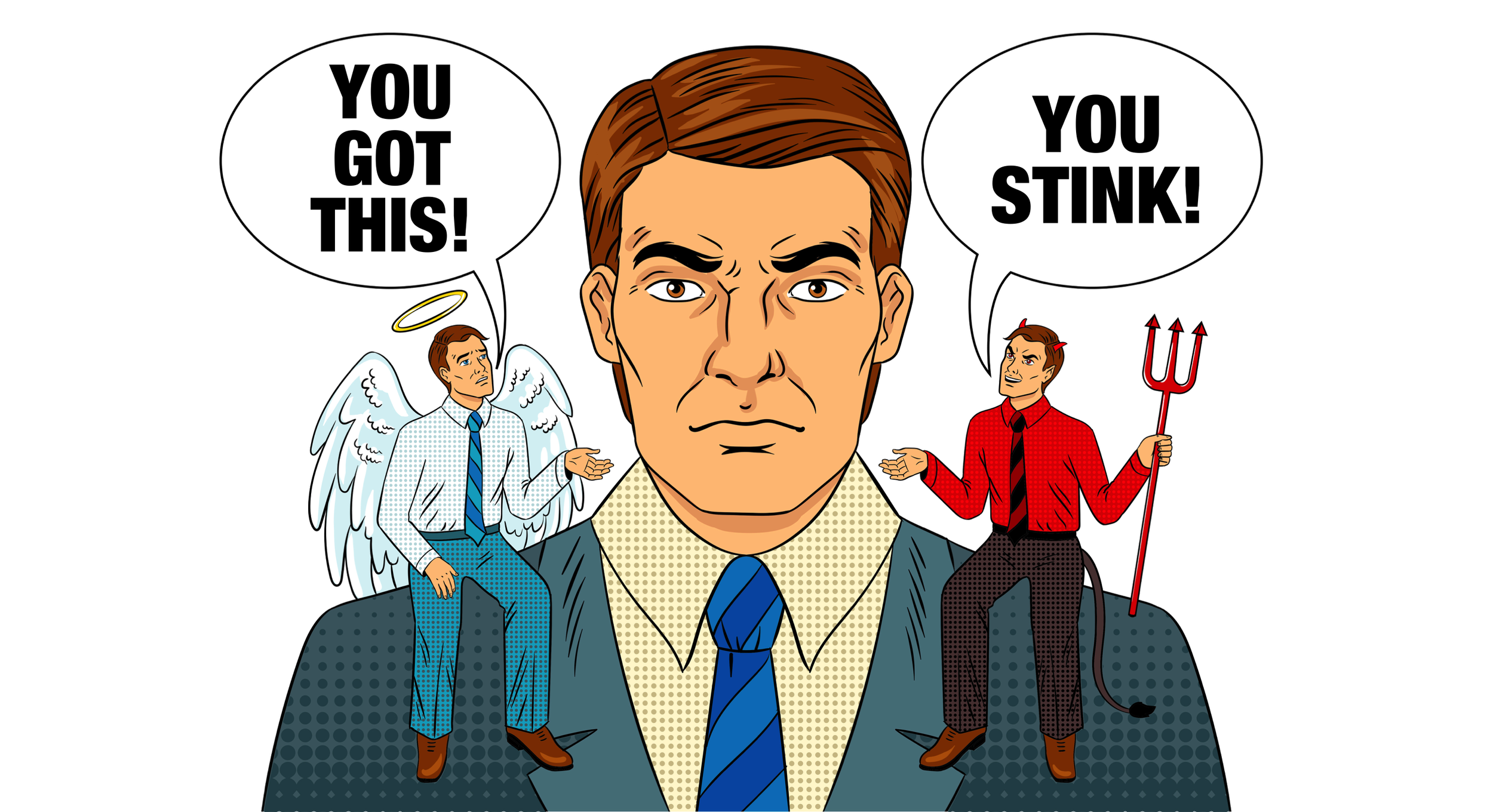
For the world's most elite performers - be they athletes, artists, or business leaders - the toughest critic they face is often not in the stands or the boardroom, but inside their own head. This inner voice, fueled by perfectionism and the pressure to succeed, can be a relentless adversary. It whispers doubts, magnifies mistakes, and convinces you that you are not, and will never be, good enough (Frentz et al., 2020).
Yet, success doesn't belong to those who are free of self-doubt. It belongs to those who have mastered the art of managing it. Legendary tennis player Serena Williams, for example, admitted to feeling "a lot of self-doubt…a tremendous amount of nerves" before a match, but learned to manage these feelings to achieve her legendary status (as cited in Forbes, 2019, para. 1). As she once said, "Just believe in yourself. Even if you don't, pretend that you do and, and some point, you will" (In-Shape, 2022). The goal isn't to erase the inner critic entirely, but to learn to turn down its volume and amplify a more productive, compassionate inner voice.
The science behind the self-critic
Research in sport psychology reveals that high self-criticism is common among athletes who believe it’s a necessary tool for maintaining their competitive edge (Ferguson et al., 2015). However, while a certain level of critical, accurate self-evaluation can drive improvement, excessive self-criticism can have devastating effects. It is often focused on the past ("I should have done better") or the future ("I'm going to fail"), drawing your focus away from the present moment where optimal performance occurs (Frentz et al., 2020).
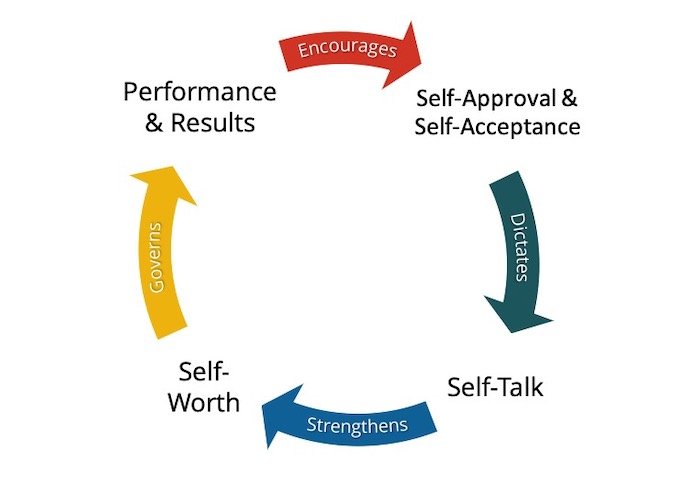
This constant focus on perceived failures can lead to decreased confidence, heightened anxiety, fear of failure, and even burnout (Frentz et al., 2020). From a neurological perspective, an overactive inner critic can trigger the amygdala, the brain's fear center, which initiates a fight-or-flight response. This creates a vicious cycle where critical thoughts feed anxiety, leading to more stress and reinforcing the inner critic's power (Tommy Davidovic, 2025).
The good news? Our brains are not fixed. Through a phenomenon known as neuroplasticity, we can actively rewire our thought patterns. What you repeatedly tell yourself, whether positive or negative, strengthens the corresponding neural pathways. Therefore, learning to manage your self-talk is not just a mental exercise—it's a form of brain training (Maximize the Mind, 2025).
How to turn down the volume on your inner critic
Here are three practical, science-informed techniques to help high-achievers manage their self-criticism and build a more resilient mindset:
1. Question the thought with cognitive restructuring
When your inner critic pipes up with a harsh statement, don't accept it as truth. Instead, interrogate it like a journalist.
Catch it: First, you need to become aware of your negative self-talk. Keep a journal to track when and what your inner critic says (Calm, 2024).
Challenge it: Ask yourself if the thought is based on fact or feeling. For example, if your critic says, "I'm a terrible public speaker," challenge it with evidence. Did you really do a terrible job, or did you just stumble on one word?
Reframe it: Replace the negative statement with a more balanced and realistic one. Change "I'm a terrible public speaker" to "I am a skilled public speaker, but I can always improve."
2. Practice self-compassion, not perfectionism
Self-compassion is the practice of treating yourself with the same kindness and understanding you would a trusted friend (Neff, 2003). Research has shown that self-compassion is a powerful tool for managing self-criticism and enhancing overall well-being (Mosewich et al., 2013).
Treat yourself like a friend: When you hear your inner critic, ask yourself, "What would I say to a friend in this exact situation?" You would likely offer kindness and perspective, not harsh judgment. Apply that same voice to yourself.
Find your "but": When a critical thought enters your mind, add a "but" to reframe the narrative (Maximeclarity, 2025). "I feel unprepared for this meeting, but I have handled tough situations before." This small adjustment can shift your perspective from one of fear to one of capability.
3. Shift your focus with grounding and observation
In the heat of the moment, your inner critic can lead to anxiety and overthinking. Mindfulness and grounding exercises can pull you out of your head and back into the present.
Breathe and observe: When the critical voice gets loud, take a deep, diaphragmatic breath. This signals safety to your nervous system and helps calm the fight-or-flight response (Maximeclarity, 2025). Observe your critical thoughts without judgment, as if they are clouds passing in the sky. Label the thought, "There's my inner critic again," to create distance between yourself and the criticism (PositivePsychology.com, 2020).
Ground yourself in your senses: To anchor yourself in the present, focus on your senses. Name three things you can feel, three things you can see, and three things you can hear. This exercise helps quiet the mental chatter by pulling your attention away from internal dialogue and into the physical world (Maximeclarity, 2025).
The inner critic's voice can be a deeply ingrained habit, but it doesn't have to be the loudest one in the room. By understanding its origins and equipping yourself with proven mental skills, you can transform it from an enemy into an ally. This journey takes practice, but the reward is a stronger, more resilient mindset that allows you to perform not despite your doubts, but with them.
Conclusion
For any high-performing athlete, artist, or business leader, the path to success is paved with relentless effort and unwavering dedication. The most successful people aren't those without an inner critic; they are those who have learned to manage it. Learning to silence this voice is not about eliminating self-awareness, but about changing the conversation from one of harsh judgment to one of constructive guidance. Silencing your inner critic is a skill that can be developed and refined with practice, guidance, and coaching.
Your inner critic may never be completely silenced, but its volume and influence are entirely within your control. By recognizing its origins, challenging its assumptions, and actively practicing self-compassion, you can transform your internal dialogue from a source of destructive self-doubt into a powerful engine for growth. The goal is not to eliminate your inner voice but to change your relationship with it, transforming it from a harsh judge into a wise, supportive friend.
If you are ready to build an inner dialogue and the right mental skills that will allow you to step more fully into your excellence, then I invite you to take one small, meaningful step today. Book a free 15-minute discovery call with me here. Let’s explore how to tailor mental-skills training to your world (athlete, artist, leader) and craft a plan to sustain your excellence without sacrificing your wholeness.
References
Advantage Performance Group. (n.d.). The power of failure. Retrieved October 9, 2025, from https://www.advantageperformance.com/talent_development/the-power-of-failure/
BetterUp. (2023, November 30). How to stop negative self-talk: 9 tips to calm your inner voice. Retrieved October 9, 2025, from https://www.betterup.com/blog/how-to-stop-negative-self-talk
The Conversation. (2024, July 9). By revealing their mental health struggles, pro athletes are scoring with fans. Retrieved October 9, 2025, from https://theconversation.com/by-revealing-their-mental-health-struggles-pro-athletes-are-scoring-with-fans-233203
Forbes. (2019, August 30). Serena Williams gives a 3-step tutorial on mental toughness - Her greatest strength. Retrieved October 9, 2025, from https://www.forbes.com/sites/carminegallo/2019/08/30/serena-williams-gives-a-3-step-tutorial-on-mental-toughness-her-greatest-strength/
Headspace. (2025, June 16). How to stop negative self-talk. Retrieved October 9, 2025, from https://www.headspace.com/mindfulness/stop-negative-self-talk
Medium. (2025, February 10). Overcoming Self-Doubt: Recognize the Causes & Practical Tips for Building Self-Confidence. Retrieved October 9, 2025, from https://abenteuerbucher.medium.com/overcoming-self-doubt-recognize-the-causes-practical-tips-for-building-self-confidence-03cbf6e3f36c
Mole, G. (2025, April 11). The best sport psychology quotes. Condor Performance. https://condorperformance.com/best-sport-psychology-quotes/
Reddit. (2023, September 14). Silencing my inner critic. Retrieved October 9, 2025, from https://www.reddit.com/r/acting/comments/16in8zn/silencing_my_inner_critic/
Sophie Parienti. (2024, May 12). Boosting your self-confidence to unlock your true potential. Retrieved October 9, 2025, from https://sophieparienti.com/blog/boosting-your-self-confidence-to-unlock-your-true-potential/
Šoková, B., Greškovičová, K., Halamová, J., & Baránková, M. (2025). Breaking the vicious cycles of self-criticism: a qualitative study on the best practices of overcoming one's inner critic. BMC Psychology, 13(1), 1–15. https://pmc.ncbi.nlm.nih.gov/articles/PMC11916919/
Time Magazine. (2023, June 9). How to overcome self-criticism. Retrieved October 9, 2025, from https://time.com/6283589/how-to-overcome-self-criticism/