


Performance Is Not About Effort: It’s About Access
Why consistency is less about how hard you work, and more about how reliably you can access what you already have. There’s a point where effort stops being the issue. Where discipline is no longer in question. Where you’ve already done the work, put in the hours, and built the capability. And yet, something still doesn’t fully translate.
Ever had this experience? You know what you’re capable of in practice but sometimes you notice it doesn’t transfer to game day or race day? We’ve all been there, including the greats. And that’s what we’re talking about here in today’s blog.

Winning the Mental Game: Auditions and Tryouts
I still remember the third year I auditioned for the world-famous Royal Winnipeg Ballet’s Professional Division. I had already tried out the previous two years unsuccessfully and had known the deep pain of disappointment and sense of failure. But this third time was different, I was not only physical, technically, and artistically ready for this next step, but I was also mentally prepared. I had been gifted a book by the father of a fellow dancer who I would later come to know as one of my mentor: Dr Terry Orlick, one of the first predominant figures in sport psychology in Canada. In a time when few people in sports, and even fewer in dance spoke of the mental side of performance, Dr Orlick’s book would not only help me prepare for my audition that year, but little did I realize then that it would also plant a seed for my second career now as a Mental Performance Coach. So I come by all this honestly: I know well that mental preparation is the difference between debilitating nerves or steady preparedness, nagging doubts or courage in the face of uncertainty, being in our heads overthinking or being focused on the right things, and mental skills is ultimately the differentiator between whether we experience success or failure.

The Mental Edge: How Olympians Perform at their Best when it Matters Most
The Olympic Games are unlike any other competition. Beyond the physical demands of training and execution, athletes are immersed in an environment that is emotionally charged, logistically complex, and psychologically intense. Travel across time zones, unfamiliar food and accommodation, altered routines, media attention, and national expectations all converge at once. Every Olympian arrives having prepared their body. What often determines whether preparation translates into performance, however, is mental readiness: the ability to regulate attention, emotion, and energy in an environment designed to test them all.
"I don't think you're human if you don't get nervous." Sidney Crosby, as cited on Olympics.ca

The Mental Side of Drafts and Free Agency: Navigating Transitions in Professional Sport
Drafts and free agency in pro sports are often framed as moments of achievement and/or milestones that signal arrival, validation, or opportunity. And they are. Yet they are also periods of profound psychological transition. For athletes entering and navigating careers in professional leagues such as the NFL, CFL, NHL, PWHL, MLB, NBA, or WNBA (just to name a few) these moments are not simply contractual or logistical. They represent identity shifts, relational change, and uncertainty under public scrutiny. Far beyond phone calls, meetings, and contract negotiations is the very real yet rarely talked about human experience these athletes and their families experience during these times of uncertainty and change. Understanding and tending to the mental side of these transitions is not an indulgence; it is a necessary component of sustainable performance and well-being.

Why Your Inner Critic Is Your Worst Enemy (And How to Silence It)
For the world's most elite performers - be they athletes, artists, or business leaders - the toughest critic they face is often not in the stands or the boardroom, but inside their own head. This inner voice, fueled by perfectionism and the pressure to succeed, can be a relentless adversary. It whispers doubts, magnifies mistakes, and convinces you that you are not, and will never be, good enough (Frentz et al., 2020).
Yet, success doesn't belong to those who are free of self-doubt. It belongs to those who have mastered the art of managing it. Legendary tennis player Serena Williams, for example, admitted to feeling "a lot of self-doubt…a tremendous amount of nerves" before a match, but learned to manage these feelings to achieve her legendary status (as cited in Forbes, 2019, para. 1). As she once said, "Just believe in yourself. Even if you don't, pretend that you do and, and some point, you will" (In-Shape, 2022). The goal isn't to erase the inner critic entirely, but to learn to turn down its volume and amplify a more productive, compassionate inner voice.

Overcoming Stage Fright
For performing artists such as dancers, musicians, actors, and singers, the stage is often experienced as both sanctuary and battleground. It is a place of deep aliveness, expression, and connection, and also one where vulnerability is fully exposed. In those moments before stepping into the light, familiar sensations may arise: a racing heart, a tightening chest, trembling limbs, or a flood of intrusive thoughts. These experiences can feel disorienting, particularly when they appear to threaten years of disciplined training and artistic devotion.
Performance anxiety, often referred to as stage fright, is not an indication of fragility, nor is it a failure of preparation. Rather, it reflects a deeply human response to situations that matter. When understood through the lens of performance psychology, nervousness can be reframed as meaningful activation, a signal that the task ahead is significant and emotionally charged. As composer and performer Lin-Manuel Miranda has noted, nervous energy can be harnessed and directed rather than fought, becoming a source of propulsion rather than paralysis (Miranda, 2016).

Vitality Over Age: A Birthday Reflection on Aliveness, Quality of Life, and Intentional Living
My birthday arrives each January, nestled into a quieter moment of the year. The holidays have passed, the pace has softened, and there is a collective pause before momentum builds again. Over time, this timing has shaped how I relate to birthdays. Rather than prompting celebration alone, it invites reflection. There was a time when the question felt automatic. How old am I now? Today, a different question feels far more relevant. How alive do I feel? Age measures the passage of time. Vitality measures the quality of our engagement with life.
What Do We Mean by Vitality?
In psychological research, vitality is described as a subjective experience of energy and aliveness.

Identity over resolutions: The quiet work of Becoming
The turning of the calendar is a natural invitation to pause. Everywhere we look, there are slogans promising seemingly overnight reinvention and transformation: “new year, new me,” ambitious new year’s resolutions, or lists of self-improvement targets. And yet, transformation is rarely found in slogans. True change is quieter, subtler, and far more intimate.
The work of transformation begins not with the calendar but with identity and beliefs. It begins with noticing the stories we tell ourselves about who we are, what we are capable of, and what we deserve. These narratives, often unconscious, shape our choices, focus, behaviours, and performance more than any external goal ever could (Markus & Wurf, 1987; Bandura, 1997).
Whether you are an athlete stepping into a pivotal season, a professional navigating a career shift, or anyone approaching a life transition, understanding and shifting your identity and its related internal narratives is the foundation of meaningful change.
Do you know the key stories you keep telling yourself about yourself? Are these helpful and empowering or creating resistance, self sabotage, and self limiting beliefs and habitual patterns in your life?

After the Applause: Understanding and Healing the Post-Event Blues in Elite Performance
There is a particular kind of quiet that follows something monumental. After the Olympic flame is extinguished. After the final whistle of a championship game. After the last routine, race, match, or performance that has shaped this season, and even your life for years. It is a quiet that does not always feel peaceful. For many elite performers - Olympic and Paralympic athletes, professional competitors, artists, and high achievers - the end of a major performance cycle can bring pride, relief, gratitude, and fulfillment. It can also bring an indescribable sense of let-down, disappointment, frustrations, and anxiousness. Regardless of how the Big Game, season, or concert tour went, unexpectedly, it can also bring emotional flatness, sadness, disorientation, or a sense of internal emptiness.
This experience is often referred to as post-Olympic blues, but that label is far too narrow. What athletes describe is better understood as post-event blues: a temporary, yet often profound, psychological and physiological response to the ending of an intensely meaningful performance chapter. And it is far more common, and far more human, than most people realize. If you are reading this and thinking, “Is that it?”, “I should be happier than I am,” or “Why does everything feel so quiet now?”, let me say this clearly:

Mental Architecture Under Stress: Lessons from Isolation, Visualization, and Elite Performance
Performance is not defined solely by physical capability. It is sustained by the mind’s ability to remain organized, oriented, and responsive under pressure.
For a submariner on silent patrol, a surgeon deep into a complex procedure, a firefighter navigating zero-visibility conditions, or a special operations operator cut off from communication, the external world offers fewer anchors. Time stretches. Sensory cues narrow. Fatigue creeps in. And yet, decisions still matter.
What determines whether performance degrades or endures in these moments is not toughness alone, but mental architecture - the internal structure that holds attention, emotion, identity, and task focus together when the external environment can no longer do that work for us.

Your Mind Is the Game Changer: Why You Need a Mental Skills Coach Now
The brain orchestrates every element of performance. Mental skills training and mental performance coaching, which is grounded in sport and performance psychology, is essentially strength and conditioning for your mind (White House Sports Psychology, 2024). Scientific literature consistently shows that psychological skills such as imagery, self-talk, emotional regulation, and attentional control can be systematically developed to enhance performance (Lonsdale et al., 2024; Šoková et al., 2025). A 2018 meta-regression of peer-reviewed studies demonstrated that psychological skills training and behavioral interventions significantly improve both behavior and performance (ScienceDirect, 2025). These findings emphasize a clear message: mental skills are not abstract concepts.
Mental skills are measurable, trainable capacities. Your mind is adaptable. Your internal responses can be conditioned. Your performance can evolve.

Alpha and Peak Performance: The Science of Presence Under Pressure
When we hear the word “Alpha,” our minds often jump to boardrooms, battlefields, or the spotlight of high performance: athletes in the zone, CEOs commanding attention, or personalities who dominate a room. But what if Alpha was not primarily about performance or dominance but about presence? True Alpha is the kind of energy that moves quietly yet powerfully through life. It is the inner force that allows us to show up fully in our own lives, care for ourselves and others deeply, and navigate the world with clarity, calm, courage, vitality, and connection.
In today’s era of constant distraction—from newsfeeds, social systems, and the inner chatter of our own minds—Alpha does not push or overpower. Instead, it reclaims. It roots. It reminds us that we are free and sovereign beings, capable of guiding ourselves and each other through chaos and cultivating coherence.
Alpha is not an act; it is an embodiment.
Alpha is your life force and it is a force multiplier.
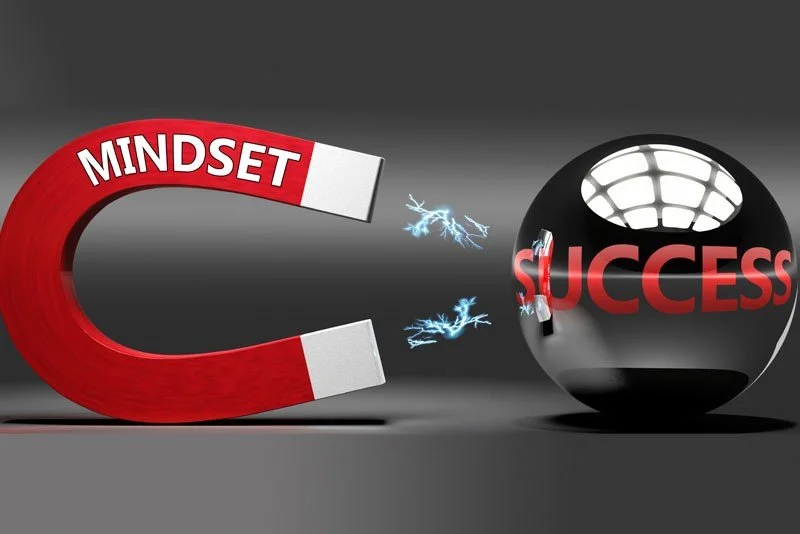
Beyond the Physical: Why Mental Fitness is the Unseen Advantage of Elite Performers
As elite athletes, artists, and business leaders, you spend countless hours honing your craft. You perfect your technique, push your physical limits, and dedicate yourself to practice. But what happens when the pressure is on? When the stakes are at their highest, and a single moment can define your success?
Your mindset becomes the differentiator.
The world’s most successful performers know that the game is won in the mind before it’s won on the field, the stage, or the trading floor. For decades, mental performance has been treated as a secret weapon—a less-discussed part of the training routine.

Motivation and criticism: A toxic co-dependent relationship
Oftentimes fluctuations and drops in motivation can be directly related to the heavy mental load of toxic, internal self-criticism. In many cases, it’s the unrelenting, tyrannical inner critic that taunts, torments, shames, and exhausts even the most driven of high performers… Understanding why motivation is important and how internal criticism impact one’s own motivation is vital, especially as it is something that can be greatly improved through knowledgeable guidance, coaching, and training in the mental gym.

Conflicts are sacred gifts preparing us for our greatest blessings
Communication skills and conflict resolution skills are necessary for long term success in all areas of our lives. The challenge? Are we brave enough to work on these interpersonal skills when presented with the often challenging real life opportunities to exercise them?

The truth will set you (and your mind) free
Practice looking at your lived experiences beyond the story, beyond the narrative (yours and others), beyond the typical playbook, beyond the situational circumstances of this moment.

Champion MindSet: with Allie Lehmann
Alexandra Lehmann has earned a spot on Team Switzerland and along with it, the opportunity to participate in international competitions for the International Ice Hockey Federation’s Women’s World Championships and 5 Nations’ Cup. A Cecil Lake, British Columbia local, The Swiss-Canadian goalie has been playing professional hockey in Switzerland’s National League for the last two years, winning a national championship with the Lugano Ladies two years ago and placing second last season (Giesbrecht, 2022).
The former Carleton women’s hockey goaltender played two years as a Raven before turning pro in the summer of 2020. During this time of transition from University to pro hockey, Lehmann said she was mindful of what she had worked on with Dr Lussier, her Mental Performance Coach, through the season: “Together, we altered my approach to playing big games and acknowledging the emotional side of the game. If I focused on staying present and competing, then the performance would take care of itself” (Hopkins, 2021). In her third pro season in Switzerland, Allie now plays for the SC Bern Frauen and has her sights set on the upcoming 2024 IIHF Women’s World Championships in Utica, USA in April.
I (CL) recently spoke with Allie (AL) and asked her how she takes care of her mental health and how she approaches her mental performance as a professional athlete. Check out her great insights below!

Champion MindSet: with Wes Sutton
This year, Bell Let’s Talk Day is on Wednesday, January 24, 2024. But worth noting is that mental health matters every day of the year. This of course applies to athletes and high performers of all walks of life. A significant part of my work as a Mental Performance Coach and Consultant involves mental health literacy; educating athletes, coaches, and teams to be proactive and preventative in their daily wellness strategies, while also training vital mental skills that support athletic and personal development, a growth mindset, and peak performances when it matters most.
I recently had the chance to catch up with Montreal Alouettes’ DB Wes Sutton, a 2X CFL East All Stars and 2023 Grey Cup Champion to ask him how he cares for his mental health and how he approaches the mental side of football and life. Read his inspiring perspectives below

Champion MindSet: with Taylor Woods
May was mental health awareness month but of course, mental health matters 365 days of the year. So I (CL) caught up with Taylor Woods (TW) pro hockey play, Isabel Cup Champion and Strong Woman World Champion to ask her about how she cares for her mental wellness and what mindset allows her to thrive as a dual sport athlete and high performer.

5 mindset tips for a successful training camp
Training camps in sports, the performing arts, and many other contexts are by nature designed to be intense, extremely demanding, experiences. Historically, athletic training camps first emerged out of military life.
About the Author

Dr. Chantale Lussier, Ph.D, MPC
Dr. Chantale Lussier, Ph.D. is a mental performance coach and consultant, the podcast host of Rising aHead, and the Founder and CEO of Elysian Insight.
She has worked with hundreds of nationally and internationally-ranked competitive, elite and pro athletes (CFL, NFL, NHL), performing artists, business leaders, as well as military and emergency-service professionals (police, fire, first responders, etc).
She is committed to elevating minds and cultures of excellence by optimizing mindset, coaching mental skills, teaching mental health literacy, and supporting high performers achieve breakthroughs, peak performances, as well as healthy and successful career transitions.
To book an appointment with Chantale, or to invite her as speaker, consultant, or coach for your team or organization, please click HERE.