
Vitality Over Age: A Birthday Reflection on Aliveness, Quality of Life, and Intentional Living
6 mins read
Dr. Chantale Lussier, PhD. CMPC

My birthday arrives each January, nestled into a quieter moment of the year. The holidays have passed, the pace has softened, and there is a collective pause before momentum builds again. Over time, this timing has shaped how I relate to birthdays. Rather than prompting celebration alone, it invites reflection. There was a time when the question felt automatic. How old am I now? Today, a different question feels far more relevant. How alive do I feel? Age measures the passage of time. Vitality measures the quality of our engagement with life.
What Do We Mean by Vitality?
In psychological research, vitality is described as a subjective experience of energy and aliveness. Ryan and Frederick define subjective vitality as the feeling of having energy available to the self, an inner sense of liveliness that supports purposeful action and engagement with life (Ryan & Frederick, 1997). This experience is not synonymous with physical fitness or the absence of fatigue. It is multidimensional, encompassing emotional presence, mental clarity, and psychological engagement.
Two individuals of the same age can live radically different inner lives. One may feel curious, grounded, and meaningfully engaged. The other may feel depleted, disconnected, or perpetually behind. The difference is not chronological age. It is vitality.
Coaching reflection
Pause for a moment and consider this question without judgment.
When do I feel most alive in my daily life?
What sensations, emotions, or qualities are present in those moments?
The Science of Aliveness and Well-Being
Research consistently demonstrates that vitality is a key component of well-being. Higher levels of subjective vitality are associated with greater life satisfaction, emotional regulation, and psychological resilience (Ryan & Frederick, 1997; Ryan & Deci, 2008). Importantly, vitality is not dependent on a stress-free life. Rather, it is shaped by how we relate to stress, autonomy, and meaning.
Self-determination theory provides valuable insight here. According to this framework, vitality increases when three basic psychological needs are supported: autonomy, competence, and relatedness (Ryan & Deci, 2000). When people feel they have choice, effectiveness, and connection, energy expands. When these needs are chronically thwarted, energy contracts.
Neuroscience further deepens this understanding. Vitality is closely linked to nervous system regulation. Chronic sympathetic activation, the state of constant pushing, striving, or bracing, mobilizes energy for survival rather than growth. Over time, this pattern contributes to fatigue, irritability, and burnout. In contrast, when the nervous system experiences sufficient safety and recovery, energy becomes available for learning, creativity, and connection.
This principle sits at the heart of my work in life coaching and mental performance coaching. Sustainable performance is not about relentless output. It is about creating the internal conditions that allow energy, focus, and motivation to renew themselves.
Coaching reflection
Notice how your body responds to this question.
Where in my life am I running on pressure rather than presence?
What might change if I allowed energy to be replenished rather than extracted?
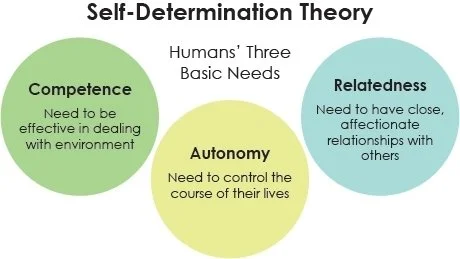
Self-determination theory, Ryan & Deci (2008)
Quality of Life Is a Lived Experience
The World Health Organization defines quality of life as an individual’s perception of their position in life within the context of their values, goals, cultural environment, and expectations (World Health Organization, 1997). This definition is powerful because it centers subjective experience rather than external markers of success.
In my coaching practice, I often work with individuals who appear successful by conventional standards yet feel internally depleted. They have optimized productivity but neglected vitality. Over time, this imbalance erodes not only well-being, but also clarity, creativity, and decision-making capacity. Vitality thrives when values and behavior align. When our actions reflect what matters most to us, energy becomes self-reinforcing. When we consistently override our needs or live according to external expectations, vitality diminishes. Quality of life, then, is not something we achieve once and for all. It is something we actively cultivate through awareness and choice.
Journaling prompt
What values currently guide my daily decisions?
Where is there alignment between what matters to me and how I live?
Where is there quiet tension or compromise that may be draining my vitality?
Vitality as a Practice
One of the most hopeful findings in the research is that vitality is not fixed. It is responsive and trainable. Positive psychology research shows that experiences of positive emotion such as interest, gratitude, and joy broaden our attention and thinking, while building psychological and physiological resources over time (Fredrickson, 2001). These states are not indulgent or trivial. They are adaptive and essential.
From a practical standpoint, this means vitality grows through small, intentional practices rather than dramatic transformations. How we transition between meetings. How we recover after stress. How we speak to ourselves when things do not go as planned. How often we pause long enough to notice our internal state.
In my work, I emphasize awareness before action. We cannot optimize what we are disconnected from. Vitality begins with noticing patterns of energy, engagement, and depletion.
Coaching reflection
At the end of a typical day, ask yourself.
What gave me energy today?
What quietly took it away?
What is one small adjustment that could support my vitality tomorrow?
A January Birthday Lens
Perhaps because my birthday falls in January, it feels less like a celebration of accumulation and more like an invitation to recalibrate. The cultural narrative at this time of year often emphasizes improvement, discipline, and self-correction. Vitality invites a different orientation. What do I want to feel more of this year? Not what do I want to fix. Not what do I want to prove. But what internal qualities do I want to inhabit more fully? More grounded. More curious. More spacious. More alive.
This shift does not lower standards. It refines them. High performance rooted in vitality is more sustainable, more creative, and ultimately more effective. It allows ambition to be guided by purpose rather than fear, and effort to be fueled by clarity rather than compulsion.
Journaling prompt
As you imagine the year ahead, complete this sentence.
This year, I want to feel more __________ in my life.
What daily choices might support that feeling?
Cultivating vitality is not something we have to do alone. In my life coaching work, I support individuals in reconnecting with what gives them energy, clarity, and a deeper sense of aliveness, especially during moments of transition or recalibration. In my mental performance coaching work, I support individuals in cultivating resilience, authenticity, and sustainable energy, so that performance is fueled by vitality rather than pressure. If you are curious to explore this work further, you can learn more about my services by scheduling a free 15mins Discovery call here.
Choosing Aliveness
Birthdays remind us that time moves forward whether we are present for it or not. Vitality invites us back into relationship with our own experience. It asks us to participate in our lives rather than rush through them. So this year, instead of counting candles, I am paying attention to spark. Where it lives. What feeds it. What dims it. Age will continue to advance. That is inevitable. Aliveness, however, is a practice. And it is one we can choose, intentionally and compassionately, again and again.
References
Fredrickson, B. L. (2001). The role of positive emotions in positive psychology: The broaden-and-build theory of positive emotions. American Psychologist, 56(3), 218–226. https://doi.org/10.1037/0003-066X.56.3.218
Ryan, R. M., & Deci, E. L. (2000). Intrinsic and extrinsic motivations: Classic definitions and new directions. Contemporary Educational Psychology, 25(1), 54–67. https://doi.org/10.1006/ceps.1999.1020
Ryan, R. M., & Deci, E. L. (2008). From ego depletion to vitality: Theory and findings concerning the facilitation of energy available to the self. Social and Personality Psychology Compass, 2(2), 702–717. https://doi.org/10.1111/j.1751-9004.2008.00098.x
Ryan, R. M., & Frederick, C. (1997). On energy, personality, and health: Subjective vitality as a dynamic reflection of well-being. Journal of Personality, 65(3), 529–565. https://doi.org/10.1111/j.1467-6494.1997.tb00326.x
World Health Organization. (1997). WHOQOL: Measuring quality of life. World Health Organization.