

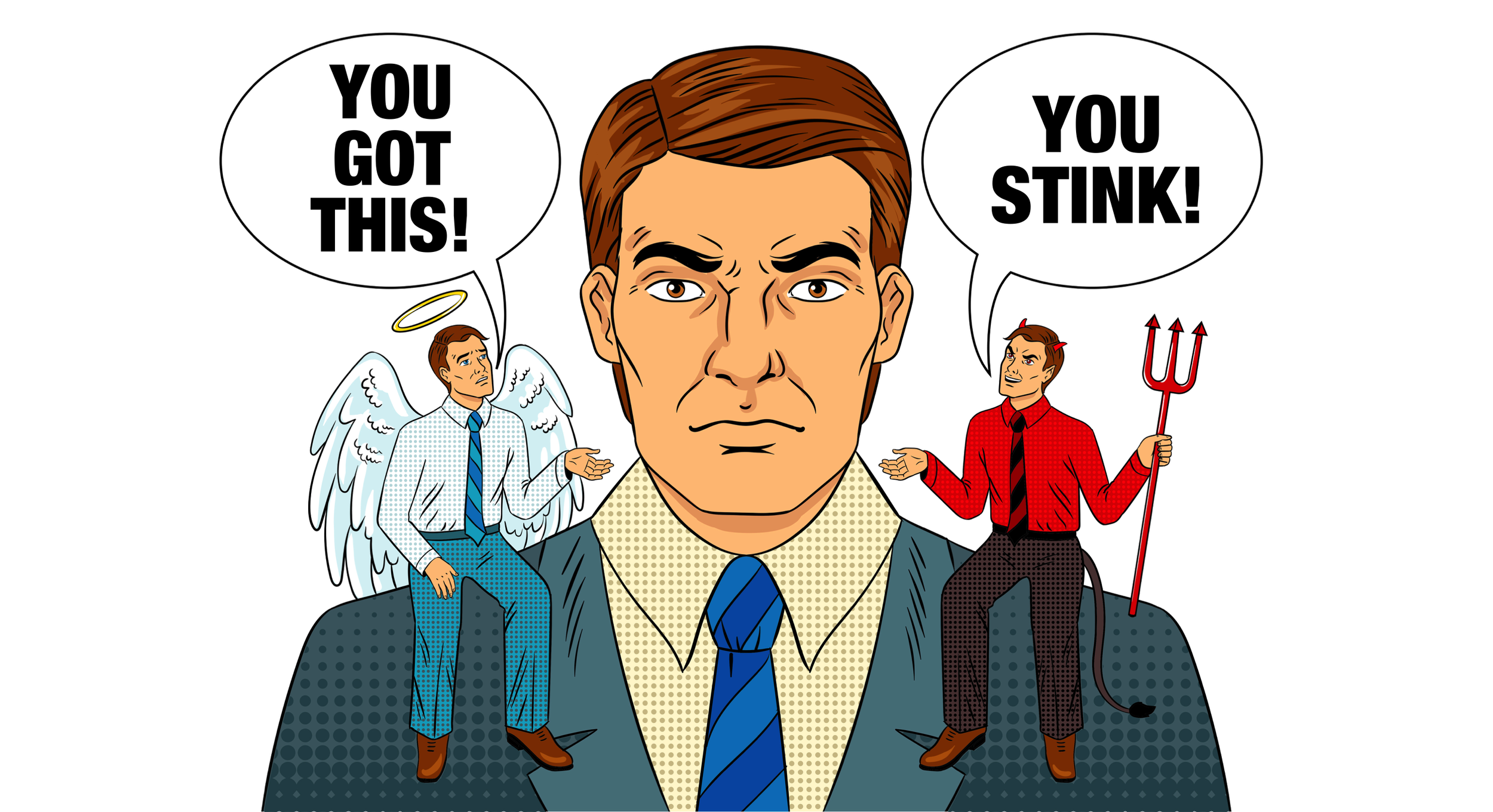
Why Your Inner Critic Is Your Worst Enemy (And How to Silence It)
For the world's most elite performers - be they athletes, artists, or business leaders - the toughest critic they face is often not in the stands or the boardroom, but inside their own head. This inner voice, fueled by perfectionism and the pressure to succeed, can be a relentless adversary. It whispers doubts, magnifies mistakes, and convinces you that you are not, and will never be, good enough (Frentz et al., 2020).
Yet, success doesn't belong to those who are free of self-doubt. It belongs to those who have mastered the art of managing it. Legendary tennis player Serena Williams, for example, admitted to feeling "a lot of self-doubt…a tremendous amount of nerves" before a match, but learned to manage these feelings to achieve her legendary status (as cited in Forbes, 2019, para. 1). As she once said, "Just believe in yourself. Even if you don't, pretend that you do and, and some point, you will" (In-Shape, 2022). The goal isn't to erase the inner critic entirely, but to learn to turn down its volume and amplify a more productive, compassionate inner voice.

Identity over resolutions: The quiet work of Becoming
The turning of the calendar is a natural invitation to pause. Everywhere we look, there are slogans promising seemingly overnight reinvention and transformation: “new year, new me,” ambitious new year’s resolutions, or lists of self-improvement targets. And yet, transformation is rarely found in slogans. True change is quieter, subtler, and far more intimate.
The work of transformation begins not with the calendar but with identity and beliefs. It begins with noticing the stories we tell ourselves about who we are, what we are capable of, and what we deserve. These narratives, often unconscious, shape our choices, focus, behaviours, and performance more than any external goal ever could (Markus & Wurf, 1987; Bandura, 1997).
Whether you are an athlete stepping into a pivotal season, a professional navigating a career shift, or anyone approaching a life transition, understanding and shifting your identity and its related internal narratives is the foundation of meaningful change.
Do you know the key stories you keep telling yourself about yourself? Are these helpful and empowering or creating resistance, self sabotage, and self limiting beliefs and habitual patterns in your life?

Motivation and criticism: A toxic co-dependent relationship
Oftentimes fluctuations and drops in motivation can be directly related to the heavy mental load of toxic, internal self-criticism. In many cases, it’s the unrelenting, tyrannical inner critic that taunts, torments, shames, and exhausts even the most driven of high performers… Understanding why motivation is important and how internal criticism impact one’s own motivation is vital, especially as it is something that can be greatly improved through knowledgeable guidance, coaching, and training in the mental gym.
About the Author

Dr. Chantale Lussier, Ph.D, MPC
Dr. Chantale Lussier, Ph.D. is a mental performance coach and consultant, the podcast host of Rising aHead, and the Founder and CEO of Elysian Insight.
She has worked with hundreds of nationally and internationally-ranked competitive, elite and pro athletes (CFL, NFL, NHL), performing artists, business leaders, as well as military and emergency-service professionals (police, fire, first responders, etc).
She is committed to elevating minds and cultures of excellence by optimizing mindset, coaching mental skills, teaching mental health literacy, and supporting high performers achieve breakthroughs, peak performances, as well as healthy and successful career transitions.
To book an appointment with Chantale, or to invite her as speaker, consultant, or coach for your team or organization, please click HERE.