
Performance Is Not About Effort: It’s About Access

Photo: Benedict Tufnell, Row360
7mins read
Written by Dr. Chantale Lussier, PhD. CMPC
Why consistency is less about how hard you work, and more about how reliably you can access what you already have. There’s a point where effort stops being the issue. Where discipline is no longer in question. Where you’ve already done the work, put in the hours, and built the capability. And yet, something still doesn’t fully translate.
Ever had this experience? You know what you’re capable of in practice but sometimes you notice it doesn’t transfer to game day or race day? We’ve all been there, including the greats. And that’s what we’re talking about here in today’s blog.
The assumption most people carry
We’re taught to believe that performance is a function of:
Effort
Discipline
Hard work
And to a large extent, that’s true. But it’s not the full picture, because effort builds capability, but it doesn’t guarantee access to that capability.
The difference that changes everything
There are two questions that define performance:
1. What are you capable of?
2. Can you access it when it matters?
Most people focus on the first. But at higher levels, the second becomes more important. Because you can have the ability and still not access it consistently. This is why athletes get to a certain competitive level and plateau. It’s because what got them to that level, isn’t what’s going to get them to the next level. And that’s where mental skills training becomes not nice to have. It becomes necessary and game changing.
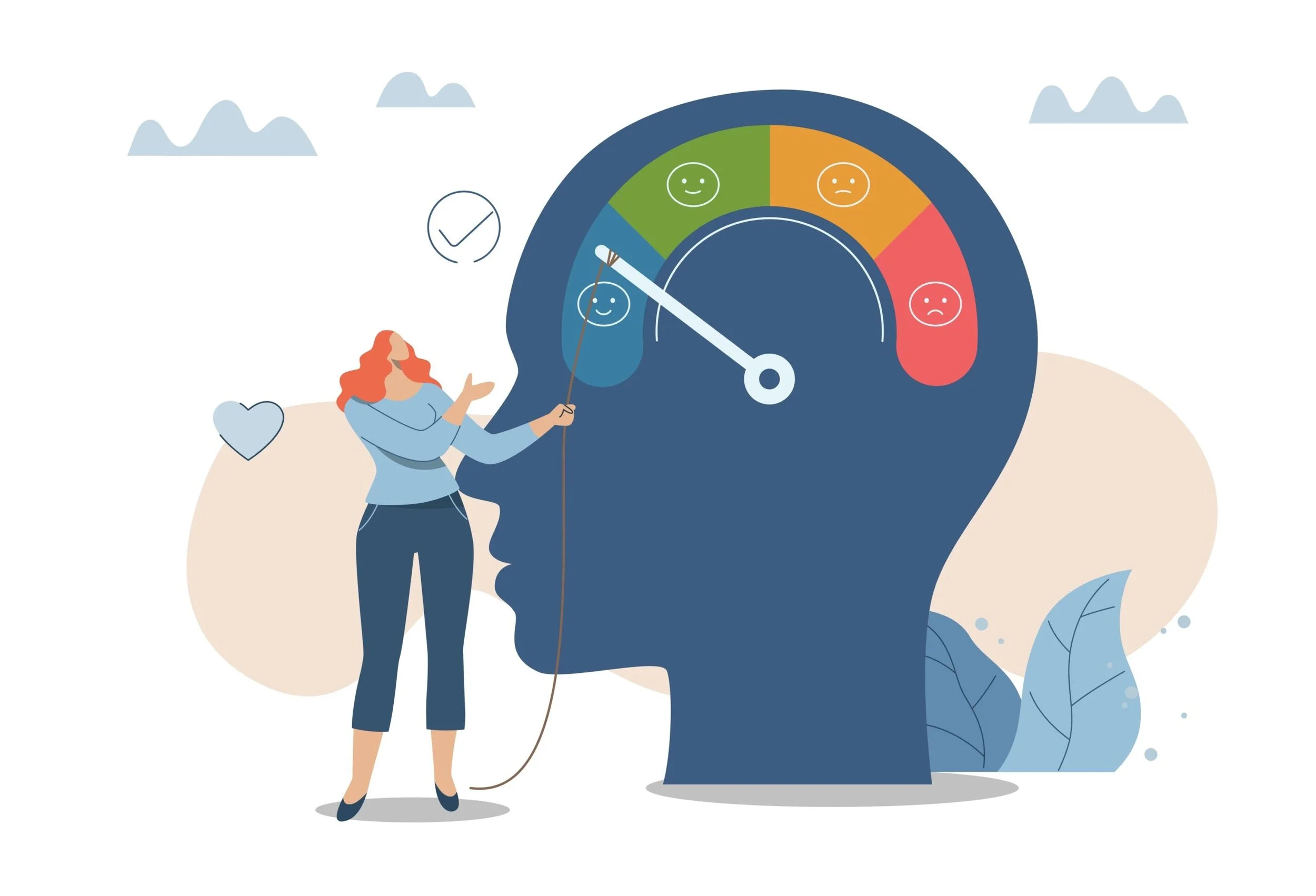
What is “access”?
Think of it like a savings account. You’ve been working day in and day out, training, getting reps under your belt, and taking care of yourself as athlete and human. That’s like making deposits every day in your savings account. Now, on game day or performance day, it’s time to access this and utilize it. Can you access what’s in your savings account easily or are there barriers? That’s access.
Access is your ability to:
Stay focused under pressure
Regulate your internal state
Execute without interference
Maintain clarity when it matters most
It’s the difference between: Knowing what to do and being able to do it in the moment.
Why access breaks down
Access is not random.
It is influenced by:
Attention
Cognitive load
Emotional state
Physiological arousal
When these factors shift, your ability to access your skills can shift with them. And let me be clear. This isn’t a matter of being “mentally strong” or “weak”. Life happens and comes at us hard sometimes. So do sports. It takes education, training, and skill to learn how to manage and direct attention, process cognitive load, how to effectively utilize one’s emotional state and/or transform it, and how to elevate or reduce one’s activation depending on present moment needs and demands. Improving access to your sport specific capabilities is the outcomes of highly trainable skills you can learn in the mental gym.
What research tells us
Performance breakdown under pressure is often linked to increased self-focus and cognitive interference. Research shows that when individuals become overly focused on themselves during performance, it can disrupt well-learned, automated, embodied skills and lead to performance decrements (Beilock & Carr, 2001). This suggests something important:
Performance is not just about skill.
It’s about how that skill is accessed under pressure.
The role of attention
Attention is one of the most powerful drivers of performance. Where it goes… Performance follows. Research demonstrates that directing attention externally (toward the task) enhances motor performance and efficiency, while internal focus can interfere with execution (Wulf, 2013). This means:
If your attention is stable → your performance is more stable
If your attention shifts → your performance shifts
Why effort alone isn’t enough
Effort builds the system. But access determines whether that system functions in real time. You can:
Train hard
Work consistently
Develop strong skills
And still struggle, if your internal system is not supporting access.
The missing layer: regulation
Access is governed by your ability to regulate:
Your attention
Your thoughts
Your emotional state
Your physiological response
Research on psychological skills training shows that improving these areas can enhance performance under pressure by supporting focus, emotional regulation, and cognitive control (Birrer & Morgan, 2010). This is the layer most people don’t train intentionally.

What changes when access improves
When access becomes more consistent:
Performance becomes more reliable
Pressure affects you less
Focus becomes more stable
Execution becomes more fluid
You stop relying on perfect conditions and start performing within imperfect ones. High performers are not just defined by what they can do. They are defined by how consistently they can access what they can do. And that is trainable.
A different way to understand performance
Instead of thinking: How do I become better? The more powerful question is: How do I improve my access to what I already have? Because often, the capability is already there. What’s missing is the ability to reliably access it. What this means for the work is that if performance is now about access, then the work becomes:
Training attention
Developing regulation
Reducing internal interference
Creating consistency in how you operate
Not just adding more effort. But refining how you perform under pressure.

A final thought
Effort is visible. It’s measurable. It’s tangible. It’s often rewarded.
But access, is part of the inner work that’s most often done behind the scenes, away from not only the public eye, but oftentimes away from coaches and teammates too. While it is far less visible, you can still see when you look at your calendar, habit trackers, or even simply ponder how you spent your week, and know whether any time or not was spent working on the mental skills that supports access to your best performance. It is what determines whether that effort translates into performance when it matters. And once you begin to see performance through that lens, everything changes. Because the goal is no longer just to work harder. It’s to build a system that allows you to access your best, more consistently.
If this resonates… This is the foundation of the inner work. Not pushing more. But performing with more intentionality, alignment, and agency over how you show up. If you’re ready to build that level of consistency into your performance, that’s where we begin.
Want to learn more? Ready to get to work in the mental gym? Book your FREE 15mins Discovery call and/or your first 60 mins appt in the Mental Gym here.
References (APA Style)
Beilock, S. L., & Carr, T. H. (2001). On the fragility of skilled performance: What governs choking under pressure? Journal of Experimental Psychology: General, 130(4), 701–725. https://doi.org/10.1037/0096-3445.130.4.701
Birrer, D., & Morgan, G. (2010). Psychological skills training as a way to enhance an athlete’s performance in high-intensity sports. Scandinavian Journal of Medicine & Science in Sports, 20(Suppl. 2), 78–87. https://doi.org/10.1111/j.1600-0838.2010.01188.x
Wulf, G. (2013). Attentional focus and motor learning: A review of 15 years. International Review of Sport and Exercise Psychology, 6(1), 77–104. https://doi.org/10.1080/1750984X.2012.723728